
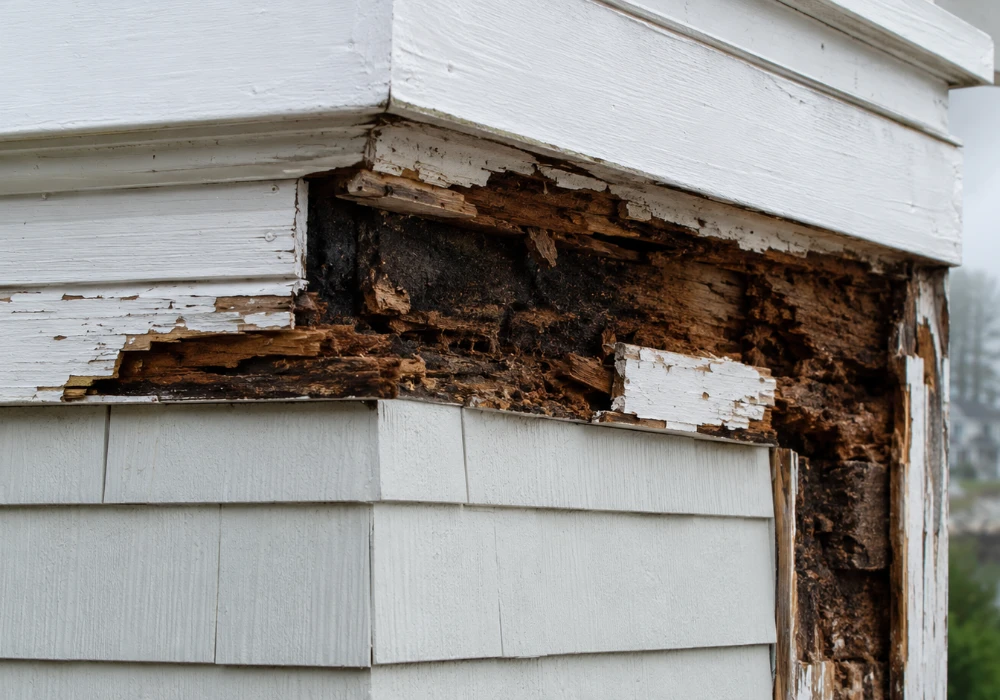
North Falmouth sits along the Cape’s western shoulder, where salt marsh, tidal creek, and Buzzards Bay frontage combine to keep ambient humidity elevated for most of the year. Homeowners here often notice something specific: the fascia, corner boards, and window trim on their homes seem to fail years before the siding itself shows any real wear. That is not a coincidence, and it is not a defect in the trim material homeowners chose. It is a direct consequence of where the trim sits in the building envelope and how much moisture exposure it absorbs relative to every other exterior component.
Why North Falmouth Trim Fails Faster Than Homes Farther Inland
Trim boards sit at every transition point on a home’s exterior, corners, window and door casings, fascia, and rake boards, which means they absorb moisture from more directions than a flat wall of siding does. In a marsh-adjacent environment like North Falmouth, that moisture load is higher and more constant than in inland Cape neighborhoods, and traditional wood trim products were never engineered for sustained humidity at this level.
Salt Marsh Humidity: A Different Kind of Moisture Problem
Coastal rain and wind-driven salt spray get most of the attention in Cape Cod exterior guides, but marsh-adjacent humidity is a quieter and more constant threat. Instead of periodic storm exposure, homes near North Falmouth’s marsh and creek systems sit in elevated ambient moisture for extended stretches of the year, which keeps wood trim damp longer than it would be even a few miles inland. That prolonged dampness is what drives fungal decay in traditional wood trim, well before any single storm event causes visible damage.
Warning Signs Homeowners Miss Until the Trim Is Compromised
- Paint that will not hold: if trim needs repainting every one to two years instead of holding a finish for five or more, moisture is moving through the wood faster than the coating can manage.
- Soft spots at corner boards and window casings: gentle pressure that leaves an impression, particularly near the base of a corner board, indicates decay has already started beneath the surface.
- Gaps opening between trim and siding: wood trim that swells and shrinks with moisture cycles can pull away from adjacent siding, creating entry points for further water intrusion.
Our Material Approach for Marsh-Adjacent Trim
For North Falmouth exterior trim replacement, Lions Siding & Roofing prioritizes materials selected for their resistance to sustained moisture exposure rather than materials that simply match the look of traditional wood trim while carrying the same vulnerabilities. This is the same logic that shapes our full exterior renovation work across the Cape’s coastal and marsh-adjacent neighborhoods, including our East Falmouth exterior trim replacement projects, where similar humidity and moisture exposure drive the same material decisions.
Trim replacement is rarely an isolated project. Homeowners in North Falmouth who are addressing trim decay often find that siding on the same elevation is showing early signs of the same moisture stress. If that is the case on your home, our Falmouth siding and roofing overview covers how we coordinate trim and siding work under one in-house team rather than separate subcontractors working from different specifications.
Frequently Asked Questions (FAQ)
My trim looks fine from the ground. How do I know if marsh humidity has already damaged it?
Surface appearance is not a reliable indicator once wood trim has been exposed to sustained humidity for several years. A hands-on inspection, checking for soft spots at corner boards, window casings, and fascia ends, is the only way to confirm condition before it becomes a visible failure.
Does trim replacement require matching my existing siding color and profile exactly?
Yes, trim is specified to match the existing siding profile and finish unless the homeowner requests a design change. We review this during the project consultation before any material is ordered.
Is it possible to replace only the trim without touching the siding?
In many cases yes, if the underlying siding is still in good condition. We assess each elevation individually rather than assuming trim and siding must be replaced together.
If your North Falmouth home is showing early signs of trim rot near the marsh, request a Free Project Review at (774) 338-6234 or visit roofinglions.com to schedule a consultation.