
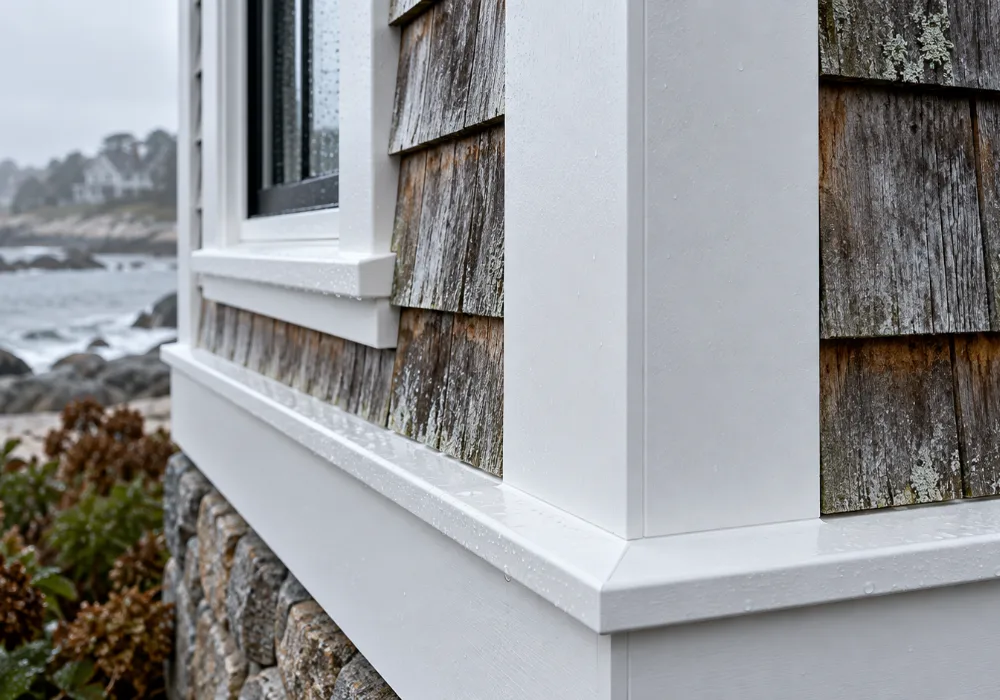
The frontline against coastal weather
Trim does more than add architectural character to a Chatham home; it acts as the primary seal for your exterior envelope. Every joint where two surfaces meet is a potential entry point for water, and trim is installed specifically to cover those transitions. Sitting at the edges, corners, and openings, it takes the direct impact of wind-driven rain, intense sun, and constant salt air. When the trim begins to fail, the structural wall behind it is immediately at risk.
High-exposure zones: rooflines and openings
Vulnerabilities often start higher up on the home. Fascia and soffit trim sit at the roof’s edge, managing the runoff from gutters and roof lines. Peeling paint, dark streaks, or sagging boards in this area indicate moisture intrusion, often signaling that the trim and the roof are aging together. Our Chatham roof replacement guide explores this relationship in depth.
Further down, window and door casings shoulder the burden of shedding water around your home’s openings. Wear typically appears first at the corners where trim pieces meet. Softness near the bottom of a window casing suggests water is sitting rather than draining. If these casings are failing, the windows and doors themselves might be compromised, a dynamic covered in our Chatham window and door replacement article.
Ground-level threats: corners and water tables
Lower on the house, trim faces a different set of challenges. Corner boards, which hold the siding together at wall intersections, can develop gaps, cracked caulk, or open end-joints over time. Water entering a corner runs down the inside of the wall entirely out of sight. Addressing corner boards is often the perfect time to evaluate the adjacent siding, a process detailed in our North Chatham siding replacement article.
At the very base of the wall lies the water table trim. Sitting closest to the ground, it battles splashing rain, snow buildup, and damp soil, making it frequently the first piece of trim to rot. Flaking paint and soft boards are clear indicators that the material has failed and requires replacement to protect the foundation line.
Material strategies for salt air environments
Traditional wood trim provides a classic, historic aesthetic, but it demands rigorous painting and sealing to survive Chatham’s salty, humid conditions. Alternatively, PVC trim has become a staple in Cape Cod renovations because it is impervious to rot and thrives in damp conditions. We break down the long-term return on this investment in our article on custom siding and PVC trim in Truro. For homes with specific historic character, specialized profiles can be sourced to seamlessly match existing architectural details.
The efficiency of combined exterior projects
Because trim, siding, windows, and roofing all overlap on the same exterior walls, isolating a trim replacement only makes sense if the surrounding materials are relatively new. If your siding or windows are nearing the end of their lifespan, combining these replacements prevents redundant labor, reduces overall disruption, and allows the entire wall system to be flashed and sealed together. Our guide on vinyl siding with custom exterior trim illustrates how these components work together.
Frequently Asked Questions (FAQ)
How can I tell if my Chatham trim is rotting?
Probe suspect areas gently with a screwdriver. Soft wood, crumbling edges, and persistent peeling paint indicate moisture damage. Dark stains and gaps at joints are additional signs.
Is it better to repaint trim or replace it?
Sound trim with minor surface wear can safely be repainted. However, trim with soft spots, deep splits, or wide, open joints must be replaced. Paint cannot bridge structural gaps or stop water that has already infiltrated the material.
Does PVC trim work on historic Chatham homes?
Yes. Modern PVC trim can be milled and selected in profiles that perfectly match traditional and historic details. We review these design choices thoroughly during your project consultation.
Can trim be replaced without removing the siding?
In some cases, yes. It depends entirely on how the original trim was installed and the current condition of the abutting siding. A site evaluation will determine if independent replacement is viable.
Does Lions replace trim along with roofing, siding, and windows?
Yes. Lions handles comprehensive exterior renovations, managing trim alongside roofing, siding, decks, windows, and doors to ensure a fully sealed exterior envelope.
Trim is the quiet defender of your home’s exterior, and small repairs made on time help protect the walls behind it. To have your Chatham trim evaluated, request a Free Project Review at (774) 338-6234 or visit roofinglions.com.